Food Insecurity in Western NC
Food insecurity in the region has increased by 10% from 2021 to 2024. (WNCHN,2024)
Food insecurity falls within the construct of social determinants of health. Social determinants of health (SDOH) are the conditions in the environments where people are born, live, learn, work, play, worship, and age that affect a wide range of health, functioning, and quality-of-life outcomes and risks. (Healthy People 2030 et. al., 2024)

Prevalence of Food Insecurity
Source: WNCHN, 2024
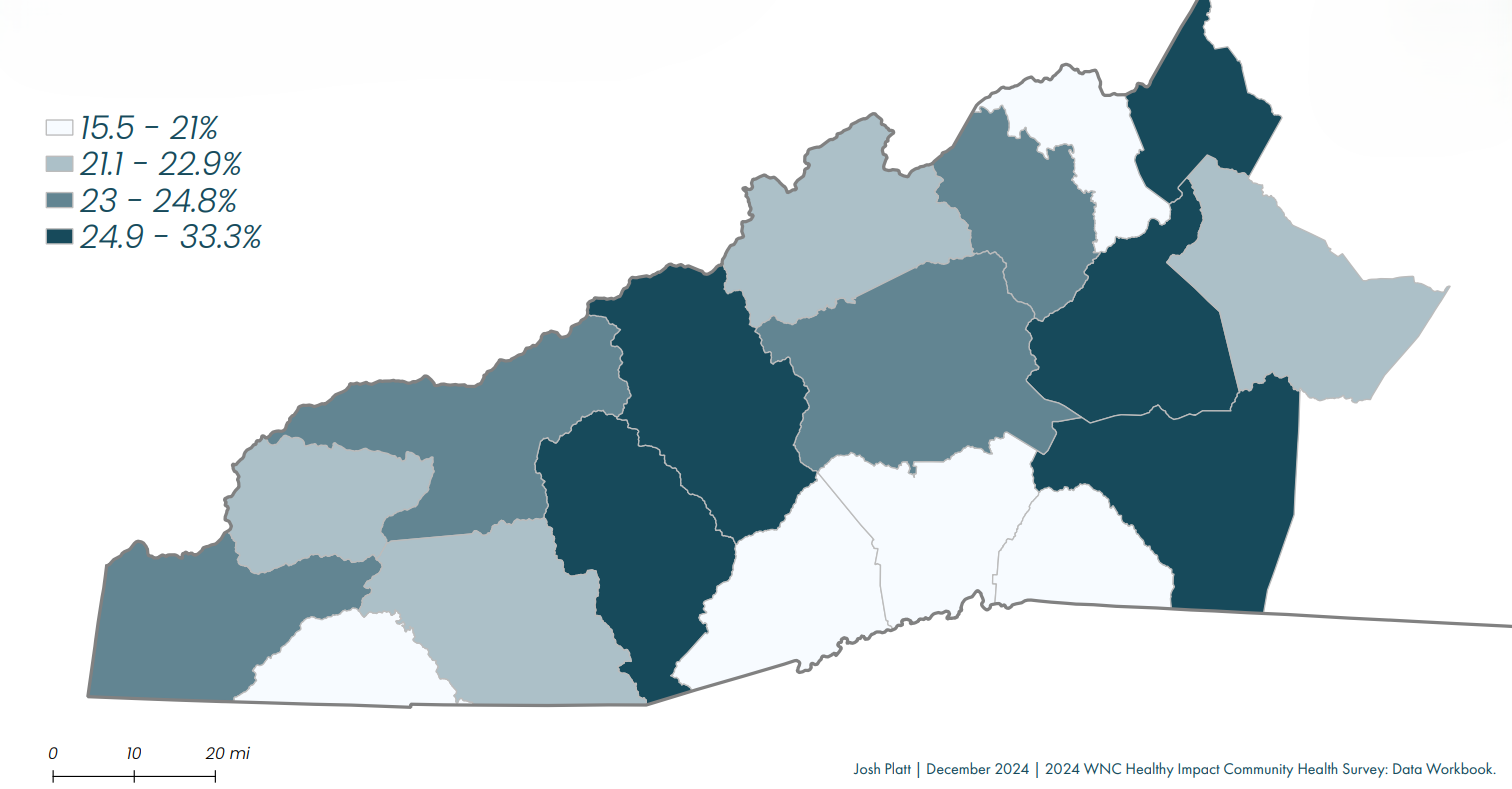
In half of WNC counties, more than 1 in 5 adults experience food insecurity. Hover over the map to see where your county lies.
What’s the Regional Story Behind the Numbers?
What is Helping
Food banks and pantries
Food vouchers
Food assistance programs – SNAP, WIC
Nutrition education
Food delivery services
Non-profits and faith based orgs
Farmer’s Markets
Community gardens
HOP
What is Hurting
Expense of healthy options, cost of groceries
Lack of volunteers
Inconvenience of fresh food options
Isolated geography and travel times
Lack of transportation
Food deserts
Federal limits on FNS
Systemic racism and discrimination
Who is Most Impacted
Low income groups
Children
Older Adults
Pregnant women
Families
Minority groups
What is Already Happening Regionally?
Want To Learn More or Work with Us?
Whether you’re applying for a grant, planning a program, or just want to know more, these tools can help.