Western North Carolina at a Glance
Western North Carolina is a primarily rural region, with approximately 805,000 people spanning 16 counties. (US Census Bureau, 2023)

Demographic Makeup of WNC
The region’s population is spread across cities, small towns, and rural areas, with wide variation in age, racial and ethnic diversity, and population density. These differences help explain how people experience health, access services, and navigate daily life in Western North Carolina.
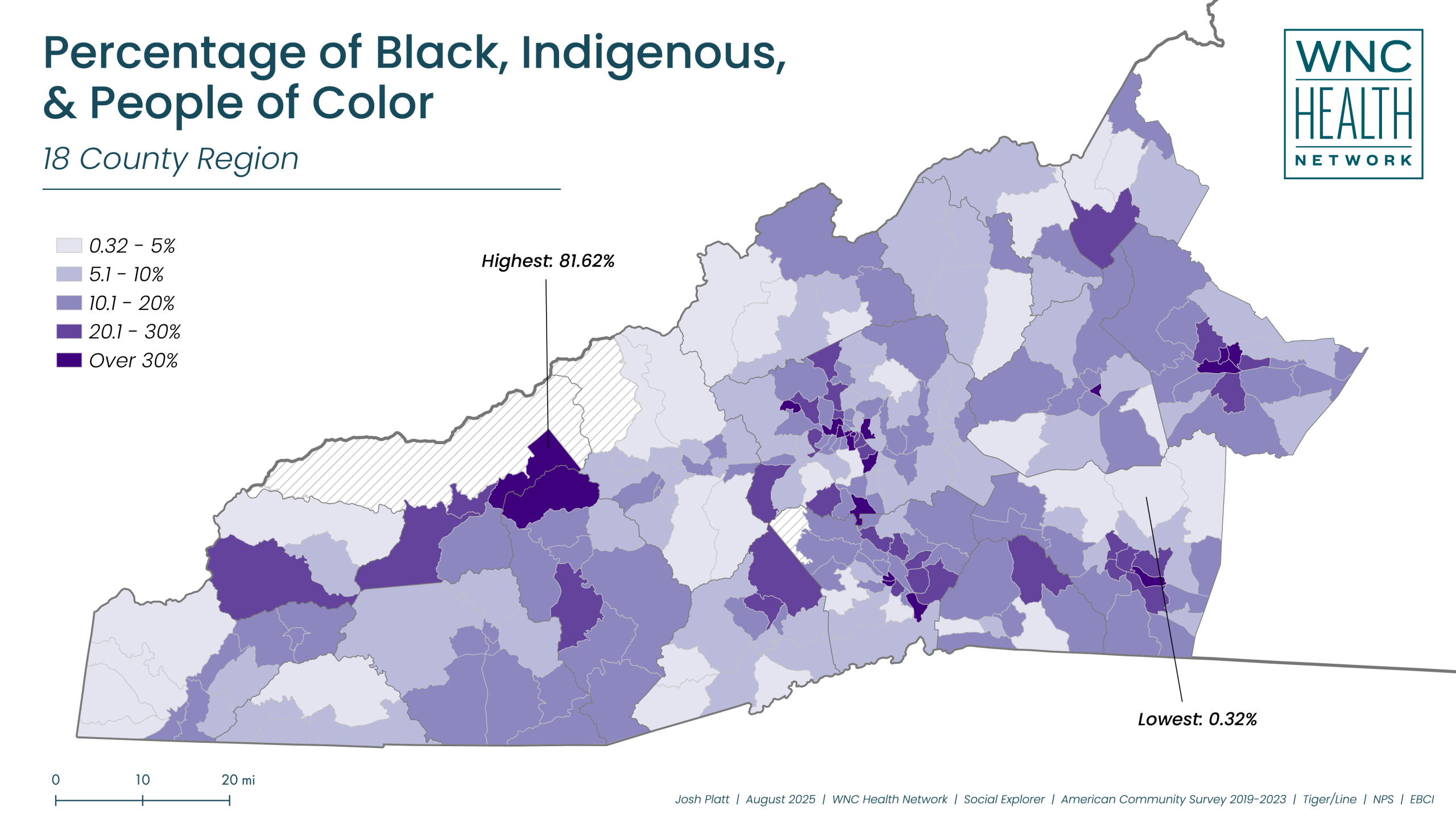
Racial and ethnic diversity in WNC tends to be greater in more densely populated areas. Areas with higher population density often have a larger share people identifying as a member of the BIPOC community. In some places, over 30% of the population identifies as BIPOC, while other, more rural areas have fewer than 1% (US Census Bureau, 2024).
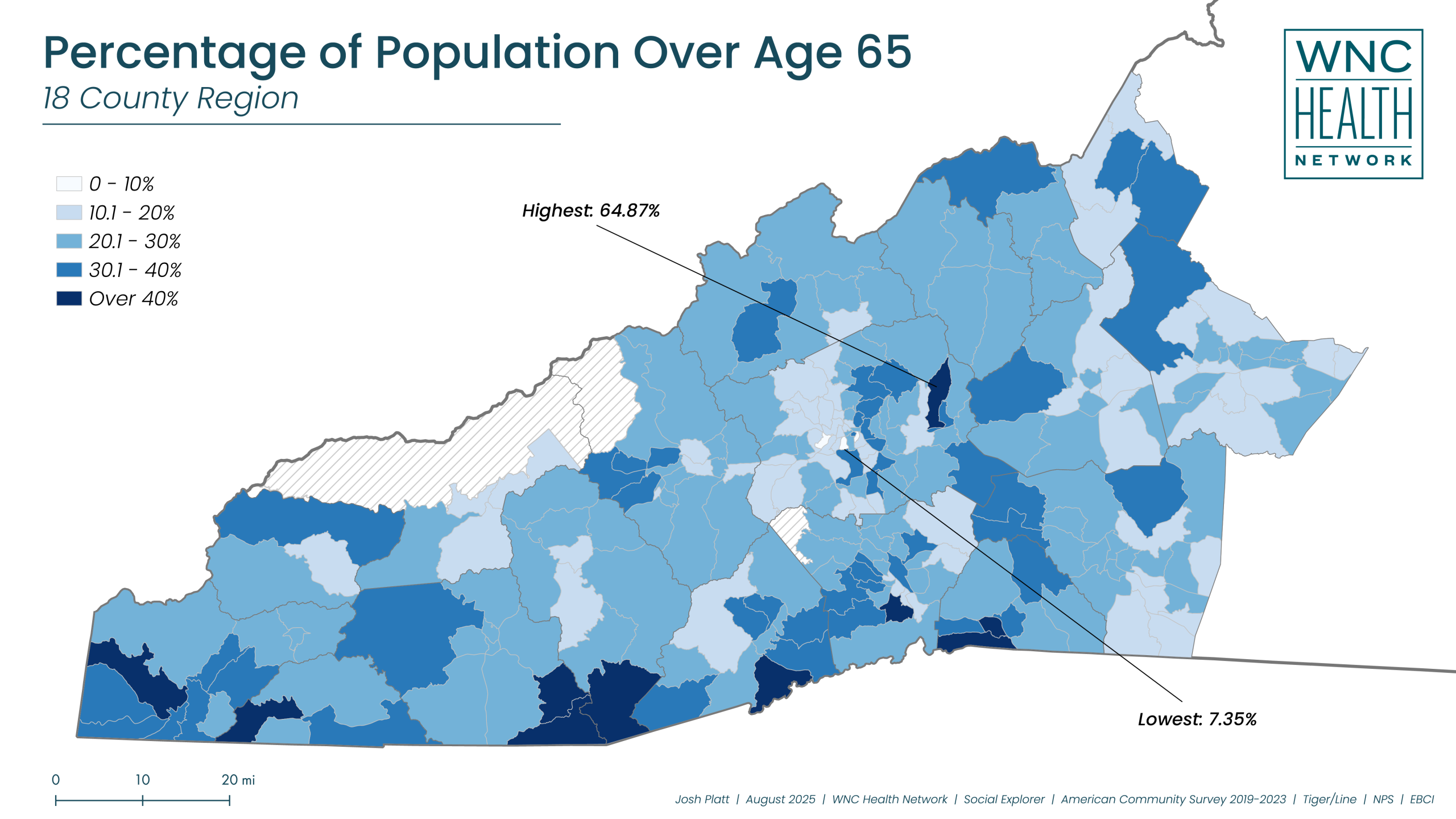

Older adults and youth make up a significant portion of WNC’s population. Across the region, adults aged 65 and older make up roughly 23% of the population (US Census Bureau, 2024).

This map shows how different parts of Western North Carolina are classified based on how rural or urban they are. These classifications are called RUCA codes and are based on things like how many people live in an area and how far people travel to work.
Some areas are labeled as metropolitan (close to cities), while others are rural or small towns. This helps us understand which communities may have a harder time getting to doctors, jobs, or other important services.

About 88% of the region is considered rural, with many communities spread out over large areas (NC Rural Center, 2024). Buncombe County, home to Asheville, is the most densely populated, with some neighborhoods reaching nearly 4,000 people per square mile (US Census Bureau, 2024)).
Social and Economic Factors
Poverty, income, and education all play a major role in people’s health. Looking at these factors across WNC helps us understand the conditions that affect people’s opportunities, access to care, and overall well-being.
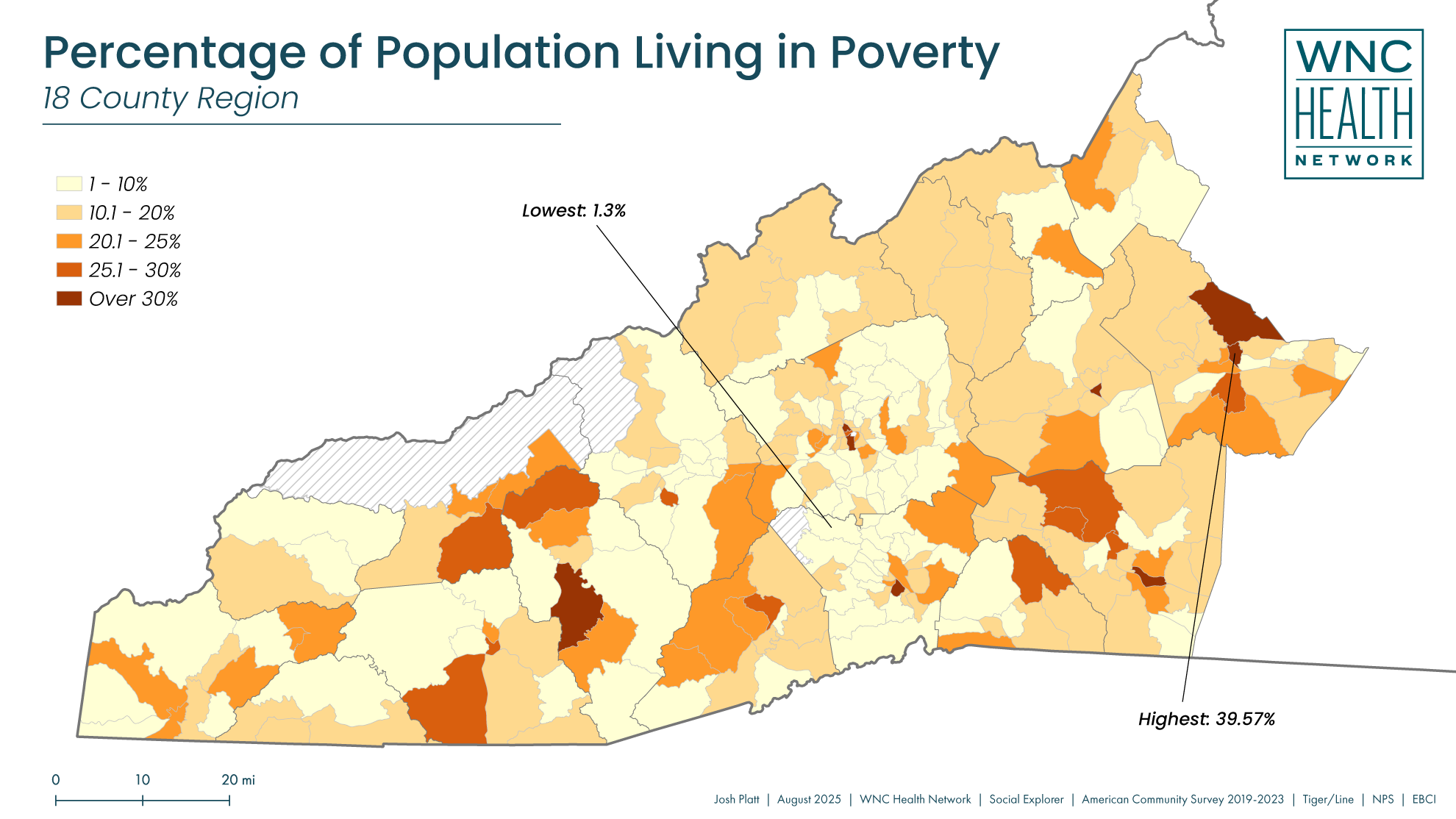
Between 2018 and 2022, about 1 in 3 people in Western North Carolina lived at or below 200% of the federal poverty level (WNCHN, 2024). Within the region, Burke County had the highest poverty rates from 2019 to 2023—over 30% overall, with some neighborhoods reporting rates as high as 39.6%.
 Between 2018 and 2022, the average median household income across the 18-county region was $55,301, compared to the North Carolina state average of $66,186 (WNCHN, 2024). Income varied widely within the region, ranging from $20,455 to $166,563, with many communities reporting median incomes between $40,000 and $60,000 (WNCHN, 2024).

In some areas of the region, nearly 29% of the residents do not have a high school diploma, while in others parts, less than 1% of the population falls into this category (WNCHN, 2024). Many communities report between 5% and 15% of residents without a high school education.
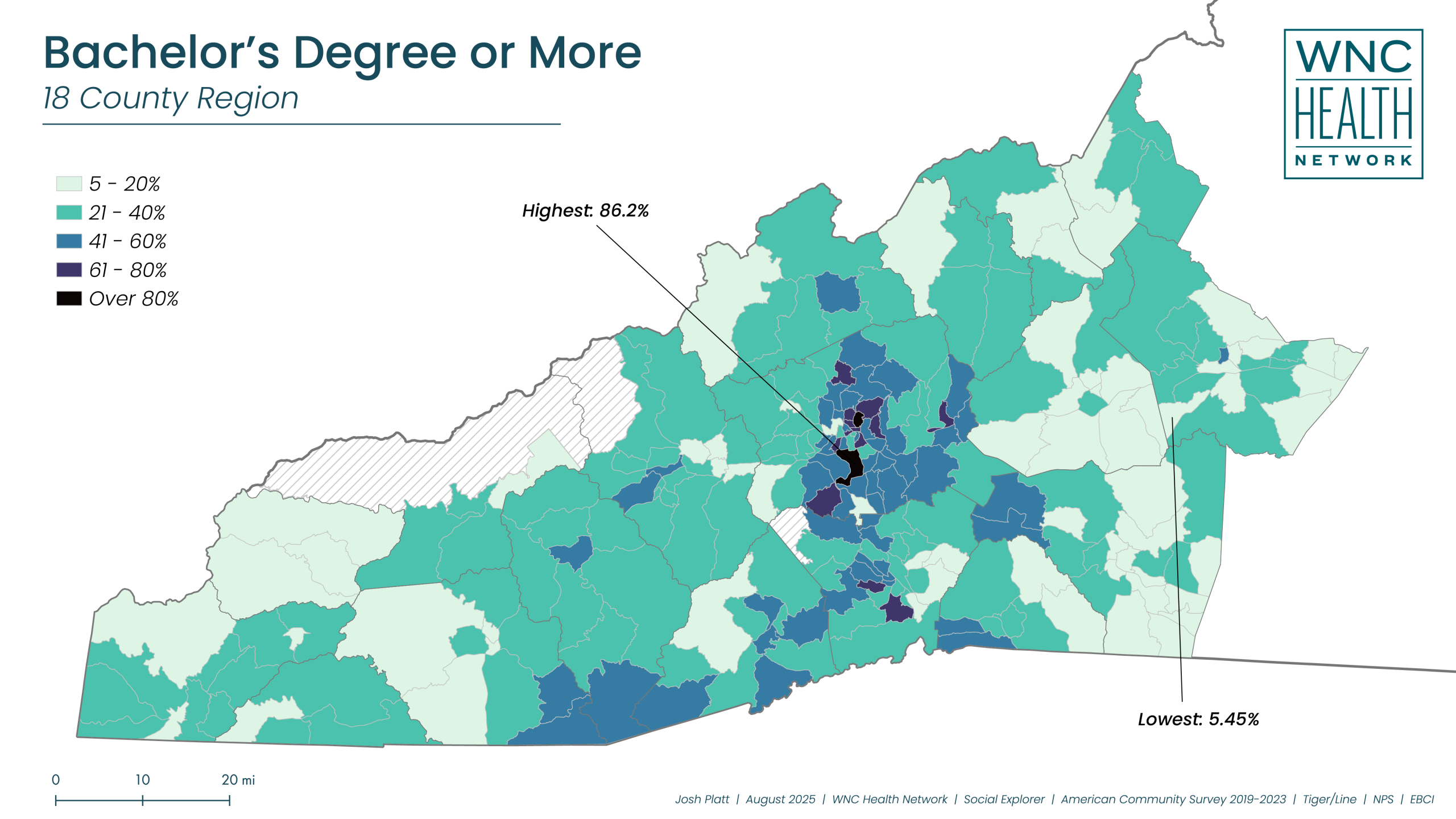
The percentage of adults with a bachelor’s degree or higher ranges from just 5.45% in some communities to over 86% in others (WNCHN,2024). Many areas fall between 21% and 40%, showing a mix of access and opportunity across the region (WNCHN,2024). Places with higher education levels often have more job options and higher income potential, which can influence overall health and well-being.
Eastern Band of Cherokee Indians and the Qualla Boundary
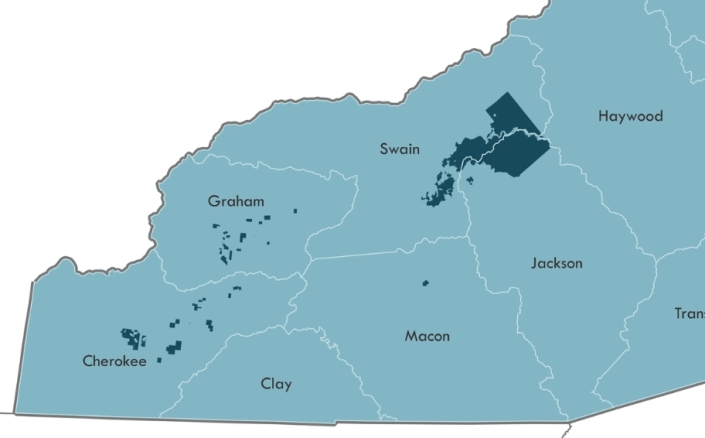
Cherokee, NC is home to the Eastern Band of Cherokee Indians (EBCI) with 13,500 members – most of whom live on the 56,000 acres of tribal land known as the Qualla Boundary (EBCI PHHS, 2024)

Members live across the region, but the Qualla Boundary is mostly within the counties:
- Cherokee (Andrews/Murphy)
- Graham (Robbinsville)
- Jackson (Sylva)
- Haywood (Waynesville/Maggie Valley)
- and Swain (Bryson City)
Want To Learn More or Work with Us?
Whether you’re applying for a grant, planning a program, or just want to know more, these tools can help.