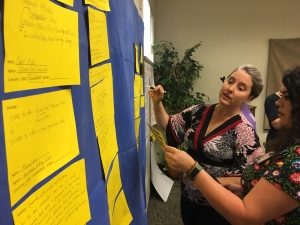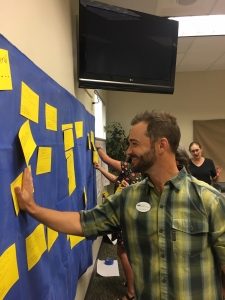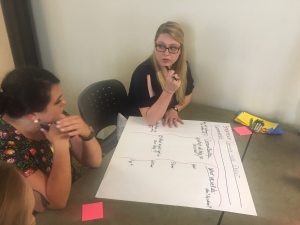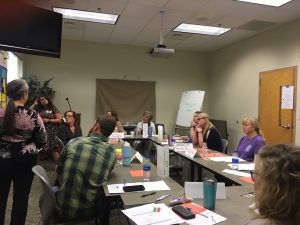
In January, 2023 Adrienne Ammerman (WNC Health Network) interviewed Meron Abebe (Operations Manager & Improvement Specialist, WNCHN) and Hannah Robinson Michael from Partners Aligned Toward Health about our organizations’ work together as it relates to Results-Based Accountability.

Learn more about PATH at: https://pathwnc.org/. Learn more about WNCHN’s RBA trainings here.


Meron and Hannah, let’s start with some introductions. Please each of you tell me a little bit about who you are – your role at your agency and the kinds of things you do day-to-day.

Meron: My name is Meron, Operations Manager & Improvement Specialist at WNC Health Network. The kinds of things I do, day to day include: Budget and financial management and reporting; Contracts; Policies and compliance, and General monitoring and accountability of organizational performance measures. I also provide support to our clients, like PATH, specifically around the implementation of evidence-based evaluation frameworks and qualitative data gathering and analysis.

Hannah: My name is Hannah and I’m the Healthy Lifestyles Program Manager at Partners Aligned Toward Health or PATH. PATH is a nonprofit. We use collaborative approaches to improve the health and wellbeing of families and community members in Mitchell and Yancey counties. Our initiatives shift as the community identifies new health needs but over the last several years, we’ve focused on healthy wellbeing and substance misuse prevention. In my role, I support a variety of programs, including the Healthy Yancey Coalition, Summer Food Program, and the Burnsville Fit Families 5K to name a few. I also support the data and evaluation work for PATH.

Meron, can you tell us at a high level what Results-based accountability is?

Meron: RBA is a way of thinking, organizing, and taking action in a disciplined manner. It is used to plan, evaluate, and improve projects, programs, and community-wide efforts. It helps people describe the contribution their work makes to the health and wellbeing of their community. RBA has been recognized as an evidence-based practice for evaluation and planning by the CDC, the National Institute of Health (IHI), and NC DHHS. In western NC, RBA is being used by hospitals, public health agencies, nonprofits, funders, and other local and regional partners in community health.

Hannah, how is PATH interested in Results-Based Accountability? What feels valuable about using RBA in your work?

Hannah: When people hear you support data and evaluation efforts for an organization some people’s eyes glaze over or they feel intimidated or there is general disinterest in the topic. We really had a desire to be able to talk about data and evaluation in a way that engages people and the RBA framework provides a commonsense approach that makes data and evaluation easy to understand regardless of your background. We also realized that internally, we needed a shared language around our work, our impact, and data & evaluation in general. The RBA framework has helped us do that and this makes moving our evaluation work forward much easier. Another major bonus of using the RBA framework is that funders have become interested in it. Sharing how PATH is using RBA has been beneficial on our grant applications and in general conversations with funders.

What made your team decide to reach out to WNC Health Network, and what kind of support were you looking for?

Hannah: Before I started at PATH, the organization was interested in improving their data and evaluation efforts to better demonstrate the impact that PATH is having on the community.
This led some staff to attend the regional RBA trainings hosted by the Network. This was helpful for building a general foundation in the framework and making an organizational switch to using RBA with all of our programs. Most recently, Meron and Emily led a PATH specific RBA training. This was great because it allowed all of our staff to be trained on RBA and they were able to use examples relevant to PATH throughout the training. We’ve also worked with the Network to develop evaluation plans for some of our specific programs. As the person on PATH’s staff that generally facilitates conversation around evaluation, it was extremely helpful to work with the Network because they laid out the plans for the meeting and facilitated conversation. I felt like I could more effectively participate in these conversations because I didn’t hold the dual role of facilitator and participant. The Network was there to hold the space. Being a part of developing these evaluation plans as a participant has build my confidence and my capacity to better lead these conversations with my team in the future. The last thing I’ll share is that WNCHN works with organizations throughout the region so they are able to share how our work and measures align with our partners through-out the region and the state. It’s been helpful for us to see how our work fits into the larger picture of the region.

Meron, Tell us a little bit more about what this partnership with PATH looked like from WNCHN’s end. [Do you have anything to add about] what kind of support you and our team provided on this project?

Meron: Our team has worked with PATH for many years on multiple projects. Last year, we provided evaluation support for two of their programs – Cougar Fit Club and Appalachian Youth to Youth. We reviewed existing strategy activities and measures and used the RBA framework to facilitate 5 evaluation workgroup meetings. We led the group through the first several steps of the RBA performance accountability decision making process to create an evaluation plan. And – during the process, we coached the team in developing and prioritizing performance measures and creating a data development agenda. We also provided a tailored virtual RBA training for PATH team members with a focus on RBA knowledge, use, and infusion into their specific projects and activities. We had 4, 2-hour sessions, spread over 4 weeks. We also administered a pre-and post-training organizational assessment tool, analyzed the data, and shared the findings with PATH.

How does this kind of project align with WNCHN’s values and approach for how we work in the region?

Meron: We bring our values to all our work with all clients. For instance, with the evaluation project and the RBA training, we co-designed the tools and materials we used with PATH and coached their team throughout, because we wanted to make sure that we are meeting their unique needs and building their capacity, rather than just BEING capacity, as that supports and sustains locally led improvements.

Wrapping up – Hannah, what’s next? How do you plan to use what you learned?

Hannah: Our next steps are to continue using RBA in our work and imbedding it into the overall functioning of the organization. We’re also eager to continue using our evaluation tools to get feedback from our customers so we can improve our work and ensure we’re meeting the needs of our community.
We also welcomed a new staff member at the beginning of the year so we’ll be sending Jacquie to an RBA training. She will be taking over our Home Remedies program. The program is an online course that introduces participants to strategies for pain management and stress reduction, all of which are presented by local complementary health providers. This program is paid for through an opioid response grant from the state so we’ll be working with Jacquie to update our evaluation tools using the RBA framework

Any words of wisdom or suggestions for other local organizations or agencies that want to infuse RBA into their work?

Hannah: PATH’s work with WNCHN focused on infusing RBA at the program level first. Later, we were able to train all of our staff in the RBA process. I’d recommend that organizations prioritize training staff on the RBA framework first, then honing in on specific programs. I’d also recommend training your entire staff if you can, not just your data people because the benefit of creating a shared language about evaluation is invaluable.

Meron: In 2023, we plan to hold two virtual RBA trainings, that we call “Getting to Results”. The first one is in February and the second one is in September. People who are interested can go to our website at www.wnchn.org and find RBA Training under the “What we do” tab. They will find a registration link on the bottom of that page.

 Thank you both so much for sharing with us about this experience.

View the data slides here.

Eileen Tallman (WNCHN MPH Spring/ Summer ’22 Intern, Indiana University, Richard M. Fairbanks School of Public Health) and Jo Bradley (WNCHN Data Manager & Improvement Specialist) recently spoke with each other about their work together on a substance misuse data analysis project which involved analysis of single and polysubstance use emergency department (ED) visits in the 18-county region of WNC.


Adrienne Ammerman (WNC Health Network Communications & Improvement Specialist)

Hi, Jo. Hi, Eileen. So, we’re going to get started with our conversation today with just some introductions if you could both tell me who you are, what your role is and a little bit about what you do day to day…


Jo Bradley 

I’m Jo Bradley. I’m the Data Manager and Improvement Specialist here at WNC Health Network. And one of my big jobs is collecting and curating the regional data for our 16- to 18-county region. And so that’s what’s going to lead us into Eileen here.


Eileen Tallman 

I was a graduate intern with WNC Health Network before I graduated with my Masters of Public Health degree in August. Day-to-day I worked with data, looking at substance misuse in emergency departments in western North Carolina.


Adrienne Ammerman 

Eileen, how did you first hear about the Health Network?


Eileen Tallman 

I moved to the Asheville area recently and I was looking for ways to get involved in the community, and also meet the requirements for my Capstone project so that I could finish my program, and I found WNC Health Network. I felt it would be a great fit, especially because of the focus on health disparities. And I also really wanted to learn about regional initiatives… In school you talk a lot about national or state or community level health data, but not a lot about regional work. So I thought that was really interesting.


Adrienne Ammerman 

Great. We’ve been happy to have you. Let’s talk a little bit about the research that you did.


Eileen Tallman 

I knew that I wanted to do something that maybe I could contribute some they were useful information to the region. So in order to do that I needed to learn about racial health priorities. Which Jo can actually talk more about.


Jo Bradley 

I’m going to go ahead and share my screen here… And what you should be seeing is a chart of our regional health priorities for the 2021-2023 CHA [Community Health Assessment] cycle. And you’ll notice that many of our counties identified substance misuse, mental health, followed by obesity, healthy eating, active living and nutrition. When we were deciding where we really wanted to start with this project, we went to the [health topic] that was selected by the most counties here in our region, which is substance misuse. So we started there, and then Eileen can tell you a little bit more about how we dug into exactly what we were going to study.


Eileen Tallman 

We chose substance misuse, [which is] a very pressing issue. And based on some research that’s already been done, I learned that polysubstance use, or using two or more substances at the same time, is becoming more important, but we really haven’t had the data to study it very well. North Carolina Department of Health and Human Services recently added poly substance misuse as a priority of the state’s opioid and substance abuse action plan. And we had emergency department data. We knew that substance misuse was a driver of emergency department visits, we just didn’t know whether there were differences between people who were using a single substance going to the emergency department, or people who were using two or more substances. So for our analysis, we compared those. We also looked specifically at people who were using opioids, cocaine, or psychostimulants. So psychostimulants are things like methamphetamine. And those were, again, a local priority.


Adrienne Ammerman 

And did you have any other partners for this research that you did?


Eileen Tallman 

We worked with Dr. Jennifer Runkle, who works at North Carolina State University. She’s an environmental epidemiologist, and she served as a subject matter expert and helped us facilitate that data, provide some technical guidance.


Adrienne Ammerman 

Great. So what were some of your high level findings?


Eileen Tallman 

What we did find overall, was that substance misuse is increasing in the emergency department for residents of western North Carolina. Overall, we found that between 2016 and 2020 there was a 5% increase across those five years. And we also found, interestingly, that rural residents were coming into the emergency department visit more for poly substance misuse over time. So you can see on the graph that between 2016 and 2019 there was an increase of 5% of people coming in using two or more substances from rural areas. But if you look between 2019 and 2020, interestingly, there’s another 5% increase. We also saw that compared to emergency department visits for opioid and cocaine, psychostimulant-related emergency department visits were on the rise. That’s not a general finding about substance misuse in general in the community. That is the percentage when you compare to opioids and cocaine. And then, overall, we saw that percentages of opioid and psychostimulant emergency department visits nearly doubled for patients reporting as Black or African American who were residents in western North Carolina.


And lastly, we also looked at some other characteristics of the patients coming into the emergency department. So compared to individuals who came in for a single substance, western North Carolina residents coming into the emergency department for poly substance misuse were more than 26 times more likely to have a diagnosis of a mental illness and 76% more likely have been with suicidal ideation or behavior. And we did control for intentional overdoses in that data. They were also two times more likely to have housing or economic problems.


We found some specific differences in individuals coming in using cocaine or psychostimulants. So individuals using cocaine were six times as likely to have a mental illness. And patients coming in for psychostimulant use were more than four times as likely to have a mental illness. They’re also more likely to have housing or economic problems. And this was the group that was most likely to be living in a rural counties.


Basically, we wanted to share what providers can do with data like this, some of this data that’s available. So hospitals and emergency services can use the data to better understand who are coming in to their emergency departments. And we can get important demographic information about the types of individuals who are using specific substances when they come in. Researchers, epidemiologists, and analysts can use data to focus on regional analyses, which is so important. We have a lot of state and national level analyses, but they maybe don’t share insights that are specific to an area. They can also study polysubstance use. Again, this is a topic that more and more people are talking about. But it can help influence funding policy and programs. Substance misuse programs can also make use of data that can help them better understand who are coming into the EDS, so they can better prepare maybe when they make referrals. And informaticists – so those are folks who use data information and knowledge to improve human health and healthcare delivery – they can help make data more accessible so that these groups who may not have the expertise or may not have an easy way to get this data, they can help facilitate.


Adrienne Ammerman 

Thank you so much for that high level overview of the research that you did, and how it can be used in our region and for people who are doing this kind of work. Jo, I’m curious how did this project align with the kinds of data projects that we do at the at the Health Network, and our values for how we work with data?


Jo Bradley 

Clinical data has long been a data gap for our region, and being able to look at it at the regional level, all the facilities information at one time. And so when we found this opportunity to work with Eileen who’s really interested in hospital data and work with Jen Runkle has been amazing at being in this region, and had access to the data we saw it as a perfect way to kind of dip our toes into the water of clinical data and looking at regional data that way. And we know it’s something that people have been wanting for a long time and have been requesting, and we started with the most important health priority across our region. So that’s just one way that we’re trying to give back to the region.


Adrienne Ammerman 

And Eileen, what was your experience like working with the Health Network on this on this research project?


Eileen Tallman 

I had a very easy time when I got to work closely with Jo. It was just super responsive and gave me a lot of guidance. So it was a great experience. And, you know, it was a combination of working together and working independently. And I just learned a ton, especially about the region and community health.


Jo Bradley 

I think about working with hospital data, there’s a lot of things that I learned as well about what needs to be in place to work with hospitals data and all the analysis.


Adrienne Ammerman 

What’s next for you, Eileen?


Eileen Tallman 

I’m continuing to dig in a little bit into this data because I was very time limited to get it done for my school project. But we’re continuing to work on that. And also, I’m looking for my next role in public health. So I’m very excited… I just got my degree, so I’m looking for opportunities in community health that will help me make use of my research background and my new skills.


Adrienne Ammerman 

Awesome. We can’t wait to see what you end up doing and hope it’s in our region. Jo, I guess on a final note, how can people find out more about WNC Health Network’s data and Data Program?


Jo Bradley 

The best place to start is our website [www.wnchn.org]. And we have a specific data section where you can download our full regional data set – that’s our primary and secondary data. That was just updated [in September 2022]. So you’ve got the latest, greatest data there. You can also sign up for our newsletters so that you keep getting information about data releases, we’ve got a lot of really good stuff that’s going to be released over the next year. And then of course, if you’re interested in getting involved or learning more, you can email me at jo.bradley@wnchn.org.


Adrienne Ammerman 

Great, thank you so much for sharing about this project and great work.


Adrienne Ammerman 

This is Adrienne Ammerman with WC Health Network and I’m talking with Lyndsey and Emily today about a project they’ve been working on together. So Lyndsey and Emily, let’s start with some introductions.


Emily Kujawa 

I’m Emily Kujawa. I’m the project manager and improvement specialist at WC Health Network. And I do a variety of things, but I would say a big part of my role is focused on supporting organizations and groups in communities across the region to do collaborative planning, figure out how do we work together and do work together collaboratively in a way that’s really results focused, that’s data driven, that’s engaging the community and people who are most affected by the issues that these groups are working on together. And this means a lot of my day-to-day is meeting with people and organizations and groups across the region to co design meeting agendas, facilitate community listening sessions (which we’ll get to talk about today), design surveys offer technical assistance, to help build capacity within communities to do this kind of work on their own.


Adrienne Ammerman 

What about you, Lyndsey?


Lyndsey Henderson 

Hey, Lyndsey Henderson, I work for the Eastern Band of Cherokee Indians Public Health and Human Services Division. My primary role is emergency preparedness. But another role of mine and something very dear to me, is facilitating the tribal health improvement process with the THIP planning team and the steering committee. I really love community health, so being part of this process is really fun and exciting for me.


Adrienne Ammerman 

Awesome. Lyndsey, tell us some of the background about this project.


Lyndsey Henderson 

So this was a grant with NACCHO, and we have to renew our tribal health improvement process. We paused for a while during COVID, and so this grant was really a great way to kind of get back in the swing of things, to collaborate with some of our partners and definitely the community.


Adrienne Ammerman 

Tell us how you chose to do community listening sessions as part of this this project.


Lyndsey Henderson 

Community voices, community experience, community knowledge, it’s all very powerful. And it’s really just a great way to enhance the way we understand and the way we address help in the community. So listening sessions provide a really great opportunity for that.


Adrienne Ammerman 

What made your team decide to reach out to WNC Health Network for support?


Lyndsey Henderson 

We have worked with the Health Network in the past for our tribal health improvement process, our tribal health assessment, and I know several other things. And we really love working with you guys because you are regional experts in community health. And like Emily was saying earlier, you are really great when it comes to planning and facilitation, and just any other technical support.


Adrienne Ammerman 

What kind of support were you looking for, specifically?


Lyndsey Henderson 

Initially, we weren’t sure other than we knew we wanted the Health Network to help us on this project. But as it turns out, Emily and her team, they were really great at helping make sense of my ideas. I had a lot of things going on up there! And Emily put me in the right direction of okay, this is what it sounds like you’re thinking what you want to do. You guys helped me develop material, especially the community listening session questions. I love those community listening session questions that that we created together! And Emily also helped facilitate lessons sessions, which was just a huge support to our team because the THIP planning team is is a small team.


Adrienne Ammerman 

Great. Emily, tell us a little bit about how this partnership worked, and do you have anything to add about the support that you and the team provided?


Emily Kujawa 

Just so much appreciation, Lyndsey, for you and your team and all the other work that you all do to support the tribal health improvement process. It’s really amazing and inspiring. Y’all have been able to keep it going and revive it, you know, in the middle of and post pandemic. I was so excited to get this request from all of you, I love working with y’all and really support this important process. I would say we met pretty regularly early on to try to get more clarity… there are so many possibilities for the direction that this project could have gone. And so it took a lot of thinking together and thinking about what are the opportunities for this project to also support where we’re at with the tribal health improvement planning process. So I think, yes, just a lot of getting clarity early on. And then as Lyndsey mentioned, just the co-designing the question guide… I also really love that guy.


Adrienne Ammerman 

What do you love about it? I’m just hearing a lot of love for this question guide. What was it that sparked the love?!?


Lyndsey Henderson 

A lot of material that we see is not tailored towards tribal communities. And so working with Emily, we really got to talk about well, what can what kinds of questions should we ask the community? And in the same sense, what kind of questions do we want to get? What kind of questions can we ask to get the best information? We really wanted these questions to be easy to understand, but also have very intentional answers. And just in the way we designed it, we talked a lot about our Cherokee culture, our Cherokee language, our Cherokee traditions, so it was really beautiful just to see that come together. Typically, in a lot of meetings, we have these icebreaker questions. And this was my favorite question just because I love it. But the question was, what are you proud of about your community or specifically EBCI? And so I think that was a great way for us just to open up. Start with something positive. And I think that really says a lot about the person and the community, in answering that question. It was just beautiful.


Adrienne Ammerman 

Emily, how does this align with the health Network’s values and approach for how we work in the region?


Emily Kujawa 

I feel like as an organization, we feel that it really matters how collaborative planning and process efforts, community engagement efforts happen, and there’s a lot of nuance within that how our team aims to embody certain values in in all of our partnerships and efforts. Meaningfully engaging community is a really core piece of that and I think that’s a big part for me of why this partnership with you, Lyndsey, and your team felt really well aligned… there is a commitment to really lifting up community voices and bringing them to a planning process. That matters. And so, to me, that felt like a huge piece of why this partnership was such a great aligned fit for us.


Adrienne Ammerman 

Lyndsey, I’m curious, what’s next? How do you plan on using what you’ve learned so far?


Lyndsey Henderson 

Emily and her team facilitated a consensus workshop to help summarize themes and key findings to basically answer the question what does health equity mean and what does it look like at EBCI, and that’s really important to us. And, for me, the way that I see this panning out is that it contributes to a shared community understanding firstly, and then we plan to incorporate those findings into our THIP teams as we develop strategies for our health priorities. So as we understand our community and health equity, we can also look towards what works best for our community in that way.


Adrienne Ammerman 

Any words of wisdom for other local organizations or agencies that want to engage their communities in this way?


Lyndsey Henderson 

One, I would say just, any time you have an opportunity to do a listening session or any other form of community engagement, absolutely do it. And what I really love about community listening sessions is that for us, storytelling is such a vital part of tradition. And two, it allows that face-to-face interaction. Listening sessions are a really nice way to take a step back from technology and the way we are used to gathering data. And to just to piggyback off of that, story data is just as important as number data, and sometimes, you know, offers a different lens to what we think we know. So I definitely just encourage communities or local health departments to look into community listening sessions and to really engage their community. It’s worth it.


Emily Kujawa 

I totally resonate with that, Lyndsey. And one other thing I’ll add is, I think something I’ve learned with these listening sessions and other sessions I’ve supported over time is that the there’s a real opportunity with community listening sessions for them to be trust-building with community members. And so being really intentional and clear about: Who’s asking these questions? Who’s going to see this data? Who’s going to use this data? We will keep you in you know, if you want to continue to be involved with this process, we invite you to continue to be involved. Thinking about some of those nuances of the of the experience of people who participate in the listening session, and they present a real opportunity to build trust and deepen relationships with people in the community.


Adrienne Ammerman 

Thank you so much, both of you, for sharing about this experience and for the work that you’re doing.

As our region of western North Carolina fights against COVID-19, WNC Health Network is donating our skills and expertise around data, convening, and facilitation to supporting regional pandemic response strategy conversations, bringing together public health communicators, as well as supporting ongoing regional conversations around food insecurity and food systems.

To learn more about what is happening in local communities around our region, like and follow WNC Health Network and WNC health departments and hospitals on Facebook – click here for direct links.

Our team has love and pride for our region and all of its people, and we feel confident that Western North Carolina’s long history of innovation and collaboration will help see us through this time – together.

Please contact us if you have additional ideas for ways we can support your efforts.

Virtual Services & Support for Community Health Improvement

In these unprecedented times, many of us may be feeling overwhelmed or at a loss for how—or even IF—we can continue to move our community health improvement work forward. It can feel daunting to determine how to maintain momentum with community coalitions, grantees, and partners in this new all-virtual world. Here are some tips and resources to support you and your community health improvement partners to adapt and continue your work in the midst of uncertainty and flux.

Tools to Support Strategy Work
This deceptively simple “Crisis Triage Tool” from the Center for Community Investment has been a useful way for coalitions, agencies, or action teams to “take stock” of strategies and how the current crisis will impact strategic direction. Links to the blank template, instructions for completing this with your team, and a sample, completed tool are included at the end of the article: https://centerforcommunityinvestment.org/blog/reimagining-strategy-context-covid-19-crisis-triage-tool

Tools to Facilitate Virtual Collaborative Work
It is possible to design and lead effective, engaging, and meaningful virtual meetings that can help move your collective work forward – it just takes a bit more planning and elbow grease to make it happen. We recommend reading this article from Digital Visual Facilitation with tips for translating your in-person meeting to a virtual setting, as a starting point.

At WNC Health Network, we are adapting our collaborative work and support to continue to be available, effective and meaningful at-a-distance. From leading virtual collaborative processes, to co-developing and implementing at-a-distance local data collection methodologies, to developing engaging, online Results-Based Accountability™ (RBA) training and coaching, to supporting access to our regional health data and providing strategic support for health communications efforts, we are committed to continuing to contribute to the important work that carries on in the midst of these unprecedented times.

If you would like to learn more about how we can support your community health work, contact us.

Last month we passed a significant milestone as public health agencies submitted their Community Health Improvement Plans (CHIPs) to the State using electronic Scorecards. Unlike a printed plan that gathers dust on a shelf, this format shares real-time information with stakeholders about how our health departments, hospitals, and other partners are working together to improve the health of our communities.
It has been a three-year journey to receive approval to submit electronic, interactive CHIPs using Scorecard. While our region is pilot testing the format this year, the State is currently making plans for the rest of NC to be able to submit CHIPs using Scorecards in the future.
We should all take pride in this demonstration that our region is continually innovating, striving for excellence, and is a leader in community health improvement for the rest of the state.
Each county’s CHIP will eventually be linked to on the “Local Priorities & Reports” section of our website.
Watch a 4-minute video created by WNC Health Network to help WNC Healthy Impact partners communicate with stakeholders about what their CHIP is, why they use an electronic Scorecard format, and how to navigate the Scorecard components:

Macon County Public Health’s Strategic Planning to Address Overweight & Obesity Involves Key Stakeholders

Erin Braasch and Lyndsey Henderson

In the current community health assessment (CHA) cycle, Macon County in western North Carolina identified “overweight and obesity” as one of its four health priority areas because it is a common risk factor for many chronic diseases and is one of the biggest determinants of overall health status. Local survey data from 2018 shows that 68.3% of people in Macon County are overweight and obese.

Lyndsey Henderson, health educator with Macon County Public Health, is leading the process locally to develop an action plan to achieve the result: “Eating smart and being active is part of everyday life in Macon County.”  To this end, Lyndsey has formed a work group that includes representatives from the local library, Angel Medical Center, Macon Program for Progress, NC Cooperative Extension, and other community groups and businesses.

Matt Bateman

Matt Bateman works at Franklin Health & Fitness, a local fitness center in Macon County. “Even though we’re private and for-profit, we have a duty to the community,” says Matt. “We can uniquely offer services to the community, whether it’s free or through scholarships, to aid this goal of eating smart and being active as part of everyday life.”

Workgroup member Amanda Pack is Clinical Nurse Director, Cardiac and Pulmonary Rehab with Angel Medical Center. “We’re focused on obesity’s connection to chronic health management and disease management – doing what we can do to help reduce risk factors and help people make a turnaround to improve their long-term health,” says Amanda. “I really want to promote knowledge of the resources that we already have, the benefits or consequences of our health and our weight, and to promote access for our community.”

Macon County has contracted with Erin Braasch from WNC Health Network to help facilitate their action planning process. For the first workgroup meeting, Lyndsey and Erin worked together to develop an agenda that would use the Results-Based Accountability (RBA) framework to guide the group through a conversation around overweight and obesity in Macon County– including what’s helping/hurting and the partners involved.

Amanda Pack and Lyndsey Henderson

Amanda Pack from Angel Medical Center says: “It’s wonderful in this workgroup to have collaborations from so many different aspects of the community with representatives from so many different places. This whole task force has been a good utilization of everyone’s time; we’re all professionals, we’re all busy. The structure is to the point, but it also allows for people to collaborate and share ideas.”

“Using RBA set me up for success,” says Lyndsey. “The thing that I liked most about how it was structured is that we specifically set aside time to talk about what’s helping and hurting. It can be difficult when groups want to go straight to what’s wrong and what’s not working. When you talk about what’s helping you uncover great things happening in the community – great resources and great people. It’s an eye opener – that even though there might be a gap here, there’s also an abundance here.” Lyndsey adds: “The way that we did it left people motivated and energized. We didn’t leave on a negative note – everyone seemed motivated and inspired.”

The workgroup spent their second meeting on community health strategic planning, including identifying indicators, performance measures, and prioritizing their first action together.

Carol Pitts with the Macon County Cooperative Extension Service runs the youth 4H and is a nutrition educator in the school systems and in job corps. Her hope for the workgroup is that they can break down siloes within their community and that, “we can help each other and grow and be healthier and make those changes in our lifestyle. It’s  not a weight loss challenge, it’s a lifestyle change we all need to make.”

Lyndsey is excited about the progress of the task force, and the potential for change that she can see. “I really believe the community health assessment is by the community and for the community. Having this group feel like they own this process and that these priorities are important for them and others in the community – that was my biggest goal in planning and organizing and getting geared up for this.”

WNC Health Network creates healthy and thriving communities by helping hospitals collaborate outside of their walls. And while community health assessments are a more public-facing way that we support this connectivity, Bug Club is another great way that hospitals work alongside each other in our region in the best interest of all of our residents.

What is now known as Bug Club was started  in the 1980s by Janice Brown as an informal gathering of infection prevention and microbiology professionals in western North Carolina (WNC). Early members included Alta Wells, Janice Brown, Ruby Connor, Ron Ferrigno, and others.

Sue Ferrigno – a medical technologist with a BS in medical technology and an MA in medical biology – joined in 1988. WNC Health Network recently spoke with Sue Ferrigno,  as well as current co-leaders Ivan Gowe and Corrianne Billings to learn more about the history of the Bug Club (housed under the umbrella of WNC Health Network since 2007), as well as why it’s so important.

How does Bug Club function?

The Association for Professionals in Infection Control and Epidemiology (APIC) is a national organization with chapters in every state. NC is divided into 11 zones, and WNC has zones 1 & 2. Bug Club is the NC APIC meeting of those two zones.

We want to have a unified infection prevention program in WNC, so the community is receiving consistent messages. Bug Club is a place where we can bring up and share practices that we feel should be adopted regionally.

Representatives from hospitals and health departments in the region are invited, and about 15 people attend. We meet every other month, usually over lunch. We have time for new happenings, and for anyone who wants to share information they learned at recent conferences.  There’s usually a topic of conversation – for example, at the last meeting two people reviewed journal articles with the group. It was a controversial topic so it was good to hear the latest published information. There’s time for networking, which is very important. Sometimes people come primarily to meet other peers, to find out how others are doing things.

What is an example of how Bug Club helped unified infection prevention in the region?

When the antimicrobial hand soap, triclosan, first started being linked with safety risks we discussed it at Bug Club,

and hospitals stopped using hand soap that contained it.  In the high risk areas they use more potent hand soaps – so that’s good too. We try to aim for uniform practice.

How did Bug Club come to be part of WNC Health Network?

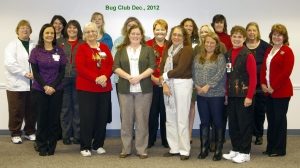
Bug Club Attendees, December 2012

In the mid-2000s the hospital CEOs part of WNC Health Network came to Bug Club and asked if we could give them comparable infection rates for their hospitals.

Infection prevention has to report their data to the CDC’s National Healthcare Safety Network; they get every hospital’s data on infection, including surgical site infections, MRSA (Methicillin Resistant S. aureus) blood stream infections, catheter-related urinary tract infections, catheter related bloodstream infections, and Clostridioides difficile. Reportable conditions are benchmarked both state wide and nation-wide and are all compared based on the size and type of hospital. In 2009 that data started being reported through the state, so there was no longer a need to report back to the CEOs of the hospitals in WNC.

That was our first interaction with WNC Health Network – the request for our infection rate data. After that we had this relationship with the organization.

How do hospitals and public health agencies work together when it comes to infection prevention?

Open communication between hospitals and health departments is very important.

For example,  at the hospital we might get a call from a family member saying – my child’s classmate has meningitis – do we need to get an antibiotic? And we know that the child is at Mission. There are a lot of privacy HIPAA rules, but if someone has a communicable disease that’s reportable the hospital must report it to the health department to help prevent further spread of the disease.

Hospitals and public health agencies work together to prevent and control transmissible diseases in our communities. If a child has meningitis diagnosed at the hospital, that information is relayed to the local health department. They follow up with the school and the family to reduce the impact of that very contagious disease in the child’s community. Bug Club is one of the few places that hospital and public health based infection preventionists can meet to discuss their work, its challenges and how to continue to provide the best care to the communities we serve.

Sue, you’re retired now – why do you still take the time to participate in Bug Club?

I really enjoyed doing what I did in my career. I feel infection prevention does have a large effect on improving health care, and Bug Club is helping with that.

How can others get involved with or learn more about Bug Club?

Professionals responsible for infection prevention at their hospital or public health agency are welcome to Bug Club – to RSVP for an upcoming meeting contact meron.abebe@wnchn.org.

By Nelle Gregory, RN, MPH

Many chronic health conditions and most dental diseases are preventable if we eat healthy foods, exercise, get good sleep, limit our stress, and practice good oral hygiene. Many of us have the information we need to make good decisions, so why do we sometimes

fail to follow our healthcare providers’ recommendations? To make changes in our behaviors, we must have the desire to act and move towards a goal…we must be motivated. For healthcare providers, it can be discouraging when patients fail to comply with their treatment recommendations. Research has shown that most of us have a hard time following our healthcare provider’s recommendations; knowledge is not enough to change behavior.  It requires that healthcare providers move from simply sharing health information to building mutual respect that allows the patient to articulate his or her own solutions.

At community listening sessions conducted by The WNC Children’s Oral Health Initiative, parents said they do not know what good oral health looks like, when they should take their child to the dentist, where they could get care, what the standard care is, and how much it should cost. They do not have the basic information they need to make good oral health decisions… and it is impacting their ability to get their children into care. Many parents shared stories of feeling shamed and talked about being ‘blamed for their kids poor oral health.’  They discussed how this made them less likely to want to go back to the dentist.

The American Dental Association (Health Literacy in Dentistry, 2009) encourages the creation of a respectful and ‘shame-free’ dental environment. By helping patients identify their own reasons to change their behavior, they build trust in and respect for their healthcare provider and are more motivated to change. Motivational interviewing is one tool that helps healthcare providers support and encourage their patients’ readiness to change.

Motivational Interviewing (MI)

Motivational interviewing (MI) is an evidence-based approach to behavior change that is grounded in a respectful conversation between provider and patient to identify a patient’s readiness for change, and that helps the patient come up with ideas about how they can strengthen their motivation to change.  Making MI the foundation of anticipatory guidance assures that providers listen to the concerns of parents and children, understand their ambivalence to change, and support their ideas about change and what they think would work.  In a dental setting, MI shifts the conversation from a one-way monologue about brushing their teeth and cutting down on sugar to a conversation about the parent and child’s experiences, challenges, and ideas about what needs to change and how the provider can support them in making the needed changes.


The American Dental Association research has shown that the main reason people do not get dental treatment is due to cost and perceived need.  The way providers counsel impacts their patients’ perceived needs.  At one of the community listening sessions a parent shared that her dentist told her to ‘just do a better job brushing her daughter’s teeth,’ but the parent, whose child is autistic, said that she has a hard time getting her daughter to open her mouth, and brushing her teeth is the least of her worries.  She left frustrated that her dentist had no understanding of autism, and her perceived need for dental services was low.

Research has shown that using MI in dentistry can lead to more lasting behavior change and improved oral health outcomes (Kay, 2016). Positive behavior change occurs more readily when healthcare providers connect the change with what the patient values – people are motivated to change when it impacts what they value rather than what someone else determines they need.  Confrontational styles or persuasion are likely to build resistance and mistrust. When health providers try to persuade or give advice, patients often feel guilt or shame.  Healthcare providers must abandon the impulse to solve their patient’s problems and allow them to articulate their own solutions. Our motivation is impacted by our culture, family norms, and the multitude of other issues we deal with in our daily lives.  The parent of the autistic child shared that she just needed her dentist to listen to her, hear the challenges she faces when trying to care for her daughter’s oral health, empathize with her, give her suggestions the dentist had heard from other autistic parents on how to get her daughter to open her mouth, and work with her to figure out a better solution.

Learn More
The WNC Children’s Oral Health Initiative is partnering with MAHEC to develop MI training for dental professionals.  If you want to get more information about the project or MI training, contact nelle.gregory@gmail.com.

About the WNC Children’s Oral Health Initiative

The Western North Carolina (WNC) Children’s Oral Health Initiative, with funding from The Duke Endowment, is working to improve children’s oral health.  The project is coordinated by Mission Children’s Hospital and  WNC Health Network and overseen by a Steering Committee of dentists, dental hygienists, physicians, public health providers, and community partners.  The group completed an assessment of children’s oral health in 18 western counties in NC in 2017.  They held parent listening sessions to hear concerns parents in WNC had about their children’s oral health.  A strategic plan was developed that prioritized the concerns voiced by parents.


References

American Dental Association. Health Literacy in Dentistry: Strategic Action Plan 2010-2015. Council on Access, Prevention, and Interprofessional Relations. Chicago, IL, 2009.

Achison KA, Rozier RG, Weintraub JA. Integrating Oral Health, Primary Care, and Health Literacy: Considerations for Health Professionals Practice, Education and Policy. Commissioned by the Roundtable on Health Literacy, Health, and Medicine Division, the National Academies of Sciences, Engineering, and Medicine.  Prepublication copy, 2018.

Kay EJ, Vascott D, Hocking A, Nield H. Motivational interviewing in general dental practice: A review of the evidence. British Dental Journal 2016; 221: 785-791

Beth Booth, originally from the coast of NC, became health director of Graham County, NC in November, 2017. Since landing in her leadership role with Graham County Department of Public Health, she has led the agency in bringing back primary care and in streamlining services, working creatively to leverage auxiliary and support staff in the face of a rural nursing shortage.

Image by Nik Shuliahin

The health department is also strengthening their work in the community and has reestablished a previously dormant substance use coalition. In addition to Beth and Amber Williams, Health Educator at the health department, the coalition includes resource officers, principals, preachers, nonprofit leaders, the leader of Celebrate Recovery (a local faith-based recovery program), and the director of a local thrift store who is a minister and does work with substance use.

As Beth was getting the coalition back in action, she determined that she wanted to conduct a listening session (or focus group), with people in recovery to both help inform the community health assessment process, and to also avoid taking on issues not viewed as high priority by those most affected by substance abuse.

Beth and Amber worked with WNC Health Network before the listening session. “Support from WNC Health Network was crucial,” says Beth. “We attended their WNC Healthy Impact training on how to convene community listening sessions. Then they worked with us

Photo of Graham County by Patrick Williams, Ecocline Photography

one-on-one to develop the script and give us pointers, including how to pay attention to body language of people in the group, how to ask people to speak up without being obtrusive, and how to sit quietly and not overpower the group or sway them in any direction.”

Beth had built a relationship over the previous year with a team leader at Celebrate Recovery, and he was able to schedule an evening for Beth and Amber to come to meet with participants in the program. Beth and Amber arrived early so that they could participate in the sermon and group dinner prior to their session. “I didn’t just walk in during the middle of the sermon and disturb everything. Staying for the whole event is crucial for building mutual trust and respect,” says Beth.

Beth and Amber started their listening session by letting participants know that the session would be recorded, and how they were planning to use the information. When the session started they had six participants – by the time it ended they had about 10 in attendance.

“I told the participants – you are the experts in this. I want to know what you’ve experienced, how you got where you are, and  how you got yourself out,” says Beth. “At one point when our tape recorder stopped running the participants let us know that it had stopped and waited to continue talking until the recorder was running again. Oftentimes public health is afraid they’re going to offend someone by asking targeted questions, but it’s not a sensitive issue to them, it’s their life. They want you to hear what’s coming out of their mouth and to give a darn about what they think.”

The listening session participants gave Beth and Amber feedback on where to locate syringe drop boxes, and how to best structure youth prevention programming. They also spoke to the challenges posed by stigma: “The group told me that there are plenty of people who have trouble getting help because people don’t think they’re worth the help.” Eventually, the team leader had to come in and stop the lively session because it was past 9 pm.

Because of feedback and insights gained from the listening session, the health department is now working on reopening the domestic violence shelter that shut down in 2017. They are exploring what can be done to expand transitional housing, and to increase prevention for youth, including resiliency education in the schools. They are looking at starting a support group for adults in recovery that is not faith-based, as well a support group for children located in the schools.

The experience – in addition to holding listening sessions with other segments of the community – has driven home for Beth that there are still too many people who don’t realize what a huge problem substance misuse poses for their friends, family, and neighbors. Beth says: “That has been an awakening for me – I took it for granted that people knew we have a problem in our county, but when I present the data and the stories I’ve heard you can hear the murmur going through the room… they’re shocked. It has started coming down to community-wide education and bringing everyone to realize, yes – there’s a problem in the county. It might not touch you, but it exists.”

Beth Booth’s Thoughts on Successful Listening Sessions:

  • Be upfront when you go in to the listening session; know that participants are going to ask you what you plan to do with the information and that you will be held accountable for how you respond.
  • Don’t make assumptions; sit and listen with an open mind.
  • Don’t think that participants are going to be close-lipped. If you build relationships and mutual respect they will respond to your questions openly and generously.
  • Be honest about what you’re looking for: ‘I’m here for you and your opinion.’
  • Let the group know that they are the experts and that you’re looking to learn from them.
  • Take the time to sit through the entire session or event (provided that you have been invited into that space). Be respectful of the participants’ time and the time you’re taking from them.
  • Take the information given to you by the participants and understand that their story is valid data, as if you had asked a scientist.
  • When you acquire information from community members you must hear it and you must do something with it – you’re responsible for it.
  • Understand that the participants have just as much passion about the issue as public health does – probably even more passion.

If you are interested in learning how WNC Health Network could support you in conducting community listening sessions of your own, contact Emily Kujawa, Project Manager & Improvement Specialist (emily.kujawa@wnchn.org).

The new Journal of Appalachian Health was created through a collaborative effort between several academic institutions and organizations located within the Appalachian region. The journal is an online, open access, peer-reviewed journal with a mission of creating a healthy and thriving Appalachia.

Marian Arledge, executive director of WNC Health Network, is pleased to represent the organization on the advisory board of the journal.

The mission of the journal is to publish research findings capable of transforming policy and practice in a rapid, yet rigorous, process. Committed to highlighting relevant, local innovations developed in the Appalachian region, the editors would like to bridge community narratives with academic research.

Editorial and advisory board members envision a journal that will be inclusive and promote equity by engaging regional stakeholders in the development of the publication. Many of the articles will include commentaries that will highlight the implications of the research. The journal welcomes readers who will use the published findings in both the health and non-healthcare fields in which they work to affect change in their communities.

“We are very excited to launch this new journal as a hub for community and academic research in Appalachia.  We anticipate that the journal will foster new research collaborations that will ultimately improve the health of the region,” said Dr. Erin Haynes, senior associate editor.

Authors interested in submitting articles for publication in the journal may follow the instructions located via the links provided on the website. Those interested in subscribing may follow instructions provided on the website to join the mailing list, connect with the journal via Twitter or contact the editors via email.